Kucios abroad: keeping the Christmas Eve supper far from home
The twelve meatless dishes, the hay under the cloth, the empty place and the straw fortunes of Kūčios, with a shopping and cooking plan for families abroad.
The first Kūčios I cooked in Melbourne was eaten at 34 degrees, with the windows open and the cicadas louder than the carols. The herring sweated, the poppy-seed milk went into the fridge between courses, and my aunt, on the phone from Lithuania, could not understand why nobody was wearing a jumper. It was still Kūčios. The hay was under the cloth, the wafers were broken and shared, and one place at the table stayed empty, as it does every year.
Kūčios (pronounced roughly KOO-chyos), the Christmas Eve supper on 24 December, is for many Lithuanian families abroad the one tradition that survives everything else. Children who have forgotten most of their Lithuanian still know what happens on that evening. This is a guide to the supper itself, the customs around it, and how families far from Lithuania put it together.
What Kūčios is
Kūčios is a family supper held on the evening of 24 December, before Christmas Day. It joins two layers. One is Christian: the end of the Advent fast and the waiting for Christmas, with the family gathered before midnight Mass. The other is much older: a meal shared with the dead of the family, at the darkest time of the year, full of small rituals meant to read the year ahead.
The supper is meatless. In many families it is also free of milk, butter and eggs, which is why poppy-seed "milk" replaces the real thing. There is traditionally no alcohol. The name is linked to kūčia, an old dish of boiled grains, peas and beans sweetened with honey water, which some families still make.
Setting the table
The table is prepared before anyone sits down:
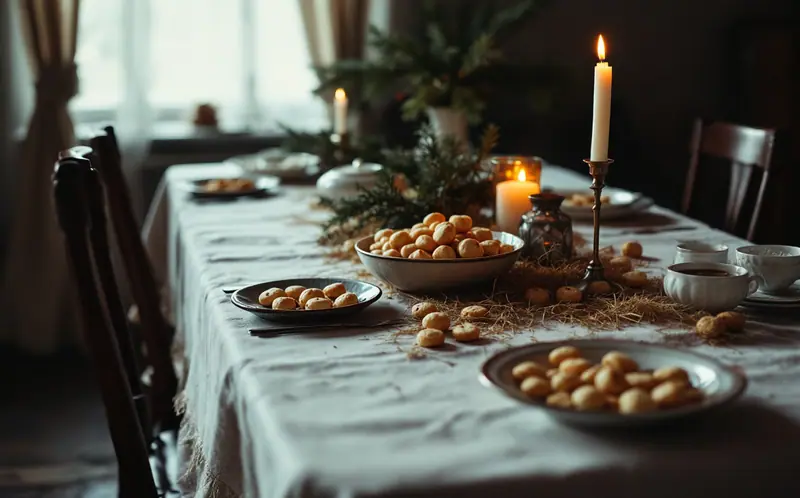
- A thin layer of hay or straw is spread over the table and covered with a white tablecloth, a reminder of the manger.
- A candle stands in the middle. Many families add a sprig of fir or spruce.
- A plate of kalėdaičiai, thin white Christmas wafers, often blessed at church, is placed near the head of the table.
- A place is set for any family member who has died during the year. Some families set it for all the family's dead.
The meal traditionally begins when the first star appears. In practice, abroad, it begins when the last guest has found parking.
The twelve dishes
Tradition calls for twelve dishes, usually explained as one for each month of the year or for each of the twelve apostles. Some regions and families count differently, and nobody checks. A typical table includes most of the following:
- Herring, in at least one form and often three: with onions and oil, with carrot and tomato, or with a mushroom sauce.
- Another fish: fried, baked or in aspic.
- Mushrooms, fried with onion, pickled, or in a sauce. Dried forest mushrooms are the classic.
- Kūčiukai (also called šližikai): small, hard, slightly sweet biscuits of yeast dough, often with poppy seeds.
- Aguonų pienas, poppy-seed milk: ground poppy seeds steeped in water and sweetened, poured over the kūčiukai.
- Spanguolių kisielius, a thick cranberry drink thickened with potato starch.
- A compote of dried fruit: apples, pears, prunes, sometimes figs.
- Sauerkraut, served cold or warmed with mushrooms.
- Potatoes, boiled in their skins.
- A beetroot dish, often a salad of beetroot, potato, carrot, pickles and peas.
- Bread, usually dark rye.
- A grain or bean dish, such as kūčia, boiled wheat with honey, or peas.
Many tables also have a vegetable salad, a cranberry or lingonberry relish, or a fruit kissel in another colour. Every family's twelve is slightly different, and comparing them is half the conversation.
How the evening goes
Before eating, the eldest person present, or whoever leads the family, says a prayer or a few words, remembers those who are not there, and breaks the first wafer. Each person then shares wafers with everyone else at the table, breaking a piece from each other's wafer and exchanging wishes for the coming year.
Everyone is meant to taste every dish. It is considered bad luck to skip one, and good luck to eat all twelve, which is easier said than done after the third herring.
Nobody leaves the table early. In many homes the food is not cleared away at the end of the evening; the dishes stay on the table overnight for the souls of the family's dead, who are believed to visit.
Customs and fortunes
Kūčios night is full of fortune-telling games, some played seriously and some for laughs:
- Each person pulls a straw from under the tablecloth. A long one means a long life; a thick one, a prosperous year; a thin or bent one, a hard year ahead.
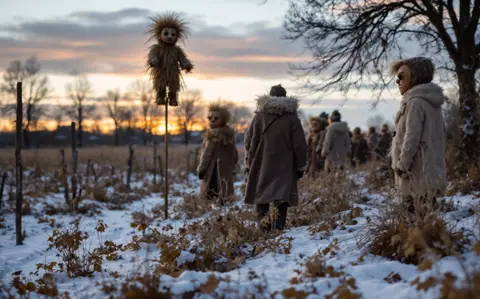
- Unmarried young women once counted fence pickets in the dark: an even number meant a wedding in the coming year.
- Listening outside for a dog barking was meant to show the direction a future husband would come from.
- Animals are said to speak in human voices at midnight on Christmas Eve, though it is bad luck to hear them.
Families abroad usually keep the straw-pulling, because children love it, and drop the rest. In flats without fences, the pickets are hard to arrange.
Kūčios abroad: sourcing the table
The good news is that almost everything on a Kūčios table can be found outside Lithuania. The bad news is that you have to start early.
Where things come from
- Herring: salted or marinated fillets from delicatessens that stock Eastern European, Scandinavian or Jewish foods, and from the fish counter in large supermarkets.
- Dried mushrooms: delicatessens and the dried goods aisle of large supermarkets; Polish and other Eastern European grocers carry the forest mushrooms that taste right.
- Poppy seeds: buy them from a shop with high turnover, because stale poppy seeds turn bitter, and buy more than you think.
- Cranberries: fresh in the northern winter, frozen elsewhere. Unsweetened cranberry juice works for kisielius in a pinch.
- Christmas wafers: Lithuanian and Polish parishes abroad often sell them in Advent, and Polish shops carry the Polish kind, which is the same idea.
- Dark rye bread: Baltic, German or Eastern European bakeries.
Adapting it
- In the southern hemisphere, Kūčios falls in summer. Families in Australia, South America and South Africa lean on the cold dishes, keep the kisielius in the fridge and eat late, when the heat breaks.
- Small households can scale down to six or eight dishes and still keep the shape: herring, mushrooms, kūčiukai with poppy-seed milk, kisielius, potatoes, sauerkraut, bread.
- In mixed families, partners and guests usually take to the evening quickly once someone explains the wafer and the straw. A short explanation in English at the start, before the wafer, avoids confusion.
- If you cannot get to midnight Mass, many Lithuanian parishes abroad hold an evening service, and some families watch a service from Lithuania online.
For children growing up abroad, Kūčios is often the evening the language comes alive. Our piece on raising children in Lithuanian and English has more on that side of things.
A sample shopping and cooking plan
This plan assumes a supper for eight on 24 December, with most of the cooking done by two people.
Two weeks before
- Buy poppy seeds, dried mushrooms, dried fruit, potato starch, rye flour if baking, and wafers if the parish is selling them.
- Order dark rye bread from a bakery for collection on the 23rd or 24th.
- Ask an older relative for their herring recipe, and write it down this time.
Three or four days before
- Buy herring fillets, onions, carrots, beetroot, sauerkraut, cranberries and fish.
- Soak and cook the dried mushrooms; keep the soaking liquid for sauces.
- Bake the kūčiukai. They keep for a week in a tin.
The day before
- Make the herring dishes and refrigerate them.
- Cook the dried fruit compote.
- Boil beetroot and vegetables for the salad.
- Soak the poppy seeds overnight in hot water.
Christmas Eve
- Morning: grind the soaked poppy seeds, mix with cooled boiled water and sugar or honey, strain if you like it smooth, and chill.
- Midday: make the kisielius and let it cool; assemble the beetroot salad; fry the mushrooms.
- Afternoon: cook the fish; boil potatoes in their skins; slice the bread.
- Before guests arrive: spread hay on the table, lay the cloth, set out the candle, wafers and the empty place.
Kūčiukai, in outline
A simple version uses flour, a little yeast, sugar, water or plant milk, oil and poppy seeds. Make a soft dough, let it rise, roll it into thin ropes, cut them into small pieces the size of a fingertip and bake until golden and hard. Serve soaked in poppy-seed milk, or crunchy on the side for those who prefer them that way. Every family argues about which.
Common questions
Do we have to make twelve dishes?
No. Twelve is the tradition, and many families abroad make fewer. The wafer, the hay, the empty place and eating together matter more than the count.
Can guests who are not Lithuanian join?
Yes, and many families welcome them. Explain the wafer-sharing first, so nobody is caught with a mouthful when wishes start.
What about children who will not eat herring?
Most children eat the kūčiukai, potatoes, bread and kisielius happily. Ask them to taste the rest, which honours the custom, and leave it there.
Kūčios is the evening when the family and its absences are all at the same table. Whatever you cook, lay the hay, set the empty place and break the wafer before anyone eats. More holiday traditions are collected in the traditions circle. If you start only one thing this year, soak the poppy seeds the night before; it is the step most people forget.

Egle Matulis
Egle lives in Melbourne, sings in a folk ensemble and cooks for more Christmas Eve tables than she can count. She writes about traditions, food, song and craft.