Vėlinės abroad: keeping All Souls' Day far from the family graves
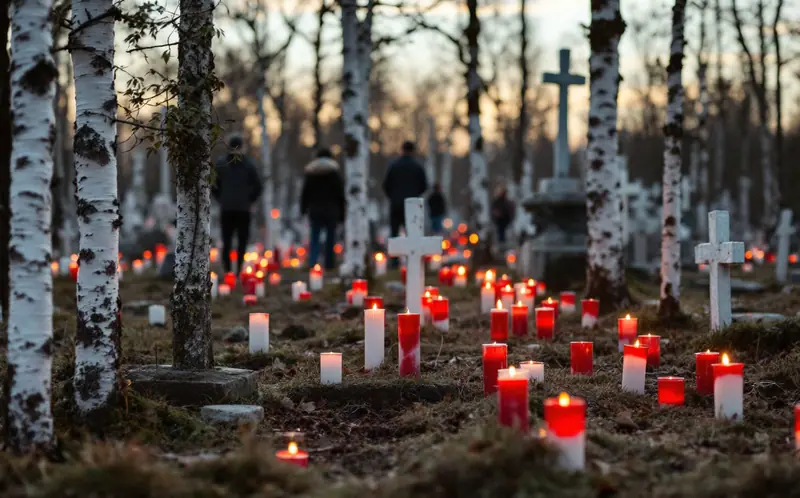
Candles on graves, names read aloud and a quiet supper: how Lithuanian families abroad keep Vėlinės when the graves they would tend are thousands of miles away.
If you have ever driven through Lithuania on the evening of 1 November, you will remember it. Every cemetery, from the big city ones to a fenced plot at the edge of a village, glows red and amber with thousands of candles in glass jars. Cars are parked along the verges, families walk between rows of graves with bags of candles and chrysanthemums, and the air smells of wax and wet leaves.
That is Vėlinės (All Souls' Day, from vėlės, the souls of the dead), together with All Saints' Day the day before. For anyone living abroad it can be the hardest holiday of the year, because its whole point is a place: the grave of a grandmother in Panevėžys, a father in Kaunas, a great-uncle in a village churchyard that only one cousin still visits. This piece explains what the days are, what people do, and how families far from those graves keep them.
Two days, one season of remembrance
The Catholic calendar has two separate feasts. 1 November is All Saints' Day, Visų šventųjų diena. 2 November is All Souls' Day, officially Mirusiųjų atminimo (Vėlinių) diena, the Day of Remembrance of the Dead. In everyday speech most Lithuanians fold both into one word, Vėlinės, and most of the cemetery visiting actually happens on the evening of the 1st, when people already have the day off.
Both days are public holidays in Lithuania. All Saints' Day has been one for a long time; 2 November was added as a non-working day from 2020, after the Seimas changed the Labour Code. The practical effect is a long, quiet weekend in some years, with traffic jams on the roads out of the cities as people drive to the family graves in the regions they came from.
The older name for the season is Ilgės, which ethnologists connect with the time before Christianity, when autumn was the period for honouring ancestors. The church calendar then settled on the November dates. Many families still treat the whole of November as a month for remembering the dead, and Catholic parishes do the same, which matters for anyone abroad: if you could not do anything on the first two days, the rest of the month is still the right time.
What people actually do in Lithuania
The core of Vėlinės is simple, and it has not changed much in a century.
- Tidying the grave: In the days before, families rake leaves, wash the stone, pull weeds and cover the soil with fir branches or heather for the winter.
- Flowers: Chrysanthemums in pots are the classic choice, because they survive the first frosts. Wreaths of fir and dried flowers are common too.
- Candles: Glass jar candles, often red or white, are lit on the grave and left burning. Since the twentieth century this has become the defining sight of the holiday.
- Mass for the dead: Many people go to church in the morning or evening, and parishes read the names of parishioners who died during the past year.
- Remembering strangers: People leave a candle on neglected graves, at memorials to the partisans or to people deported to Siberia, and on soldiers' graves from the wars of the twentieth century.
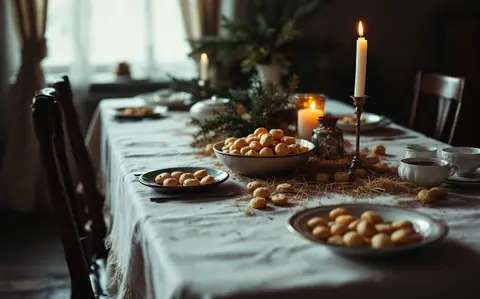
- A quiet evening: Older customs included leaving food for the souls of the dead or sharing food with the poor. In many homes the evening is still calm: a simple supper, family photographs on the table, stories about people who are gone.
There is no costume and no party. The mood is reflective without being gloomy, and a lot of conversation happens at the cemetery itself, between relatives who might not otherwise see each other until Christmas.
Why it hits differently abroad
Emigrant families from every period have had the same problem. The people who left after the Second World War often could not visit their parents' graves at all for decades. Later emigrants can fly back, but rarely in the first week of November, in the middle of a school term and a working week.
Meanwhile the country you live in may mark the season in a completely different way. In North America and Britain, 31 October is Halloween, with pumpkins and costumes. In Ireland the old feast of Samhain sits underneath the same date. In Melbourne, where I live, November is late spring, the jacarandas are out and the light in the evening feels wrong for candles on graves. None of that is a problem, but it means the days pass without any outside reminder unless you make one.
How families abroad keep Vėlinės
Here are the ways I have seen families in Australia, America and Europe mark the days. Most combine two or three.
Light a candle at home
The simplest form is a candle on the windowsill or on a table beside photographs of relatives who have died. Some families use a proper grave candle in a glass jar, bought from a Lithuanian or Polish grocer, so the evening looks and smells right. Others put a candle in the window facing the street, which is how many people in Lithuania mark days of remembrance in general. Keep it away from curtains and do not leave it burning when nobody is home.
Visit the graves you do have
Even a second-generation family usually has graves nearby: grandparents who emigrated, an aunt, a family friend from the parish. The big Lithuanian cemeteries in places such as Chicago, and the Lithuanian sections of cemeteries in other cities, are full of candles on the first weekend of November. If the people you are thinking of are buried in Lithuania, tending a local family grave is a reasonable substitute, and children understand it easily.
Many communities also visit memorials: a monument to the deportations in a church garden, a cross outside a Lithuanian house, the grave of a well-known emigrant writer or priest. These are places where a candle from anyone is welcome.
Ask someone at home to light a candle for you
Relatives in Lithuania often take on the graves of family members who live abroad. A message before 1 November asking a cousin to add a candle and a pot of chrysanthemums, and a photograph sent back afterwards, is common and is nothing to feel awkward about. If there is no one left, some parishes and local cemetery caretakers in Lithuania will tidy a grave for a modest fee; ask the parish office in the town where the grave is.
Go to Mass and give the names
Lithuanian parishes abroad usually hold a Mass for the dead in the first days of November, and many collect lists of names to be remembered in prayers throughout the month. Writing the names of your own dead on the list, with the full Lithuanian forms of their names, is a small task and a good one to do with older children.
Tell the stories
Remembrance only works if the names mean something. A quiet supper with a few family photographs on the table, and one story about each person, is the part children are most likely to carry into their own homes later. You do not need a ritual for this, just a little time and a phone switched off.
A simple plan for a family evening
If you want something concrete, here is an outline that works for a weeknight, adapted from what our folk ensemble friends do.
- Before the day: collect photographs of three or four relatives who have died, from both sides of the family if you are a mixed household. Write their names on small cards in Lithuanian, with dates if you know them.
- After school or work: if there is a family grave nearby, go together, tidy it, and light one candle. Leave a second candle on a neglected grave nearby, which children tend to love doing.
- At home: set a candle and the photographs on the table. Before eating, each person reads one card aloud and says one thing they know about that person. If nobody knows anything, that is a good prompt to call a grandparent.
- Supper: keep it plain. A soup, bread, perhaps a dish the grandparent liked. Vėlinės is not a feast.
- Afterwards: send a message to relatives in Lithuania, ask how the cemetery looked, and ask for a photograph of the family grave.
For mixed families and newcomers
Spouses who did not grow up with Vėlinės sometimes find it morbid at first, especially if they come from a tradition where cemeteries are visited only at funerals. It helps to explain that the day is social as much as sad: in Lithuania it is the one evening when whole extended families meet at the graves, catch up and then go for a meal. Children, in my experience, take to it easily. Lighting a candle for someone is an act they understand at any age.
If your partner's own culture has a day for the dead (a Mexican Día de Muertos altar, an Irish November Mass, a Jewish yahrzeit candle), the two traditions sit together comfortably. Some families light candles for both sides of the family on the same evening.
A note on the graves themselves
Families abroad sometimes worry about what will happen to graves in Lithuania once the last close relative there has gone. Lithuanian cemeteries are managed locally, usually by the municipality or the parish, and rules on abandoned graves vary. If a family grave matters to you, it is worth finding out who manages that cemetery, keeping a contact, and making sure a living relative knows the exact location. A photograph of the grave with a note of the row and plot, kept with your family papers, saves a great deal of searching later. Families who left in the waves described in our piece on Lithuanian emigration often found that this kind of simple record was the thing they most wished they had.
Common questions
Is Vėlinės a sad holiday?
It is serious but not funereal. People talk, greet neighbours at the cemetery and often eat together afterwards. The atmosphere of a cemetery full of candles is calm rather than grim.
Do you have to be Catholic to keep it?
No. The church feasts give the dates, but lighting a candle and remembering relatives is a family custom that plenty of non-religious Lithuanians keep.
Is it too late if the first days of November have passed?
Not at all. November as a whole is traditionally a month of remembrance, and a candle lit on the second weekend is still in keeping with the season.
What about Halloween?
Many Lithuanian families abroad let children enjoy Halloween on 31 October and then keep the next two days quieter. In Lithuania itself Halloween has become more visible among young people, and the two sit side by side without much conflict.
More on the year's customs is gathered in the traditions circle, and the run-up to the winter holidays starts in earnest with Advent, a few weeks after the last candles burn down.

Egle Matulis
Egle lives in Melbourne, sings in a folk ensemble and cooks for more Christmas Eve tables than she can count. She writes about traditions, food, song and craft.