Family papers in the basement: what a cracked foundation means for them
Emigrant letters and old photographs in the basement? How to spot foundation cracks and damp early, and protect the family archive while it is fixed.
The best family gatherings end up in the basement. Someone remembers the box of old photographs, and soon half the guests are on the stairs while an aunt reads out a letter written in Kaunas before the war. Lovely, until somebody spots a crack in the wall behind the boxes that was not there last year.
For a family that keeps its history in the basement, a crack in the foundation is a paper problem as well as a house problem. Specialist firms explain their work on their own sites, and one local name you will see is GK Foundation Repair. This piece covers what to look for, who should look at it, how to protect the family papers in the meantime and what to note down for the next gathering.
What the boxes in the basement are up against
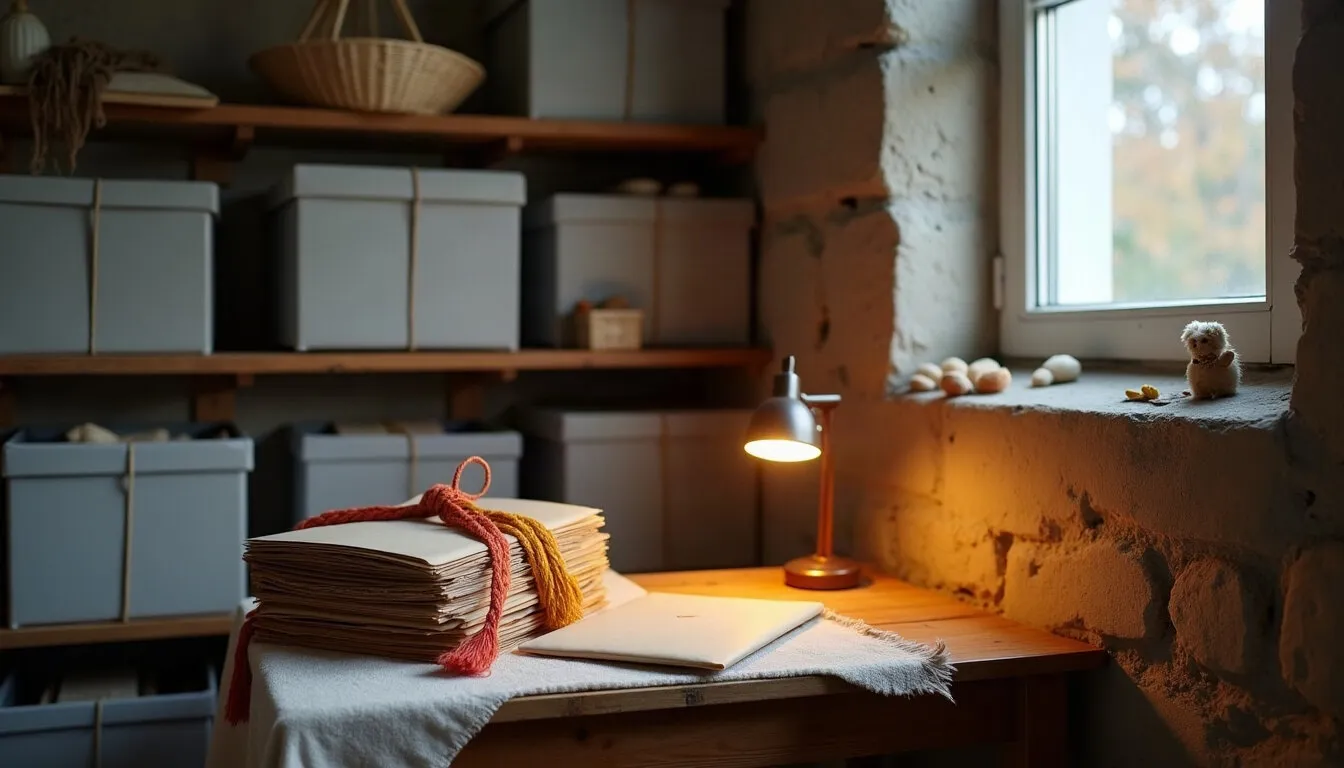
Most diaspora families have a version of the same collection. Emigrant letters in thin airmail envelopes. A passport from the interwar republic. Displaced persons' camp papers. Wedding photographs from Chicago or Cleveland, programmes from Saturday school concerts, a folded woven sash from somebody's first dance performance. Much of it ended up in the basement because that was where there was room.
Paper and photographs dislike three things: damp, big swings in temperature and light. A basement protects them from the third and can be terrible for the first two. In a region with hot, humid summers and heavy rain, which describes middle Tennessee and much of the South, the ground around a house goes through cycles of soaking and drying. Over the years that movement can open cracks in foundation walls and floors, and wherever there is a crack there is a path for water.
The difficulty is that the damage is slow. A box sitting against a damp wall can look fine on the outside for years while the bottom layer of letters quietly turns to mould.
Signs worth taking seriously
You do not need to be an engineer to notice that something has changed. Walk round the house, inside and out, with a torch, and take your time.
In the basement, look at the walls and the floor. Cracks that are wider at one end, that run in a stair-step pattern through blocks or brick, or that have grown since you last looked deserve attention. So do damp patches, white powdery deposits, water marks low on the walls and a musty smell that hangs about even on a dry day.
Upstairs, the signs are quieter. Doors and windows that have started to stick or will not latch, new gaps around frames, cracks in the plaster above a door and floors that suddenly feel uneven can all be connected to movement below.
Outside, walk the full perimeter. Look for cracks in the foundation where it shows above ground, in a patio or in the driveway close to the house, and watch where the gutters send the water when it rains. A downpipe that empties right against the wall is one of the commonest culprits, and one of the easiest to change.
Take photographs with a coin or a ruler beside each crack and note the date. That gives you, and anyone you ask for help, a record of whether it is moving.
What you should not do is try to judge for yourself whether a crack is structural, or attempt repairs to a foundation. That is work for a qualified professional. Some cracks are cosmetic and some are not, and telling them apart is exactly what a foundation specialist is for.
Two-country note: In Lithuania, plenty of family papers survived in farmhouse attics and wooden chests rather than basements, partly because village houses often had only a small cellar for potatoes and preserves. Families who moved to the city usually kept documents in a cupboard or a drawer in the flat. The diaspora habit of storing everything below ground is a very North American one, and it is worth questioning.
Who does what
This is where a family occasion can help rather than hinder, because there are hands available. In our house we have always shared out the jobs before guests arrive, and the basement can be one of them.
The family: move every box of papers and photographs away from the walls and off the floor, today. Put them on shelves or pallets at least a little above the floor, in a part of the basement that feels dry. Clear the gutters and make sure downpipes carry water away from the house. Note any changes you see over a few weeks.
A foundation or concrete specialist: inspect the cracks and the drainage, explain what they think is causing the problem and what they suggest, and give you a written quote. A good company will tell you which items are urgent and which can be watched. Firms that also do concrete and masonry work can often look at a cracked patio or driveway on the same visit, which is useful if the outside drainage is part of the story.
The keeper of the family archive: every family has one, whether they asked for the job or not. They should go through the boxes with gloves and a mask if there is any sign of mould, separate damaged items, and decide what needs proper care. For valuable or fragile documents, a museum, a local historical society or a conservator can give general advice on how to look after them.
It helps to have one person speak to the company on behalf of the family, with the photographs and notes in hand. Foundation questions can be technical, and a specialist will explain things more clearly to someone who has the details ready than to three siblings ringing separately with three versions of the story.
If someone suggests skipping the inspection and simply painting a waterproof coating over the crack, be cautious. A coating can hide a symptom while the cause carries on.
What it costs in effort
I will not guess at prices, which depend entirely on the house and the problem. What I can describe is how the effort usually falls.
The first part is quick and free: moving the boxes and clearing the gutters takes an afternoon with two or three people. The inspection is a visit, and the written assessment that follows gives you something concrete to decide on. If repairs are needed, they can mean noise, digging outside, and some disruption in the basement. Plan them for a quiet period, not the week of a family wedding or a name-day party. Ask the company how long the work should take, what it will mean for access to the basement, and whether anything needs to be moved beforehand. Then move the archive boxes upstairs for the duration, so that nobody is carrying letters past a team with a concrete mixer.
The less visible effort is the archive work. Going through boxes of letters takes far longer than anyone expects, mostly because everyone stops to read them. That is part of the point. Book a weekend for it, invite the cousins who are interested, and make a pot of coffee.
A short checklist for the basement:
- Boxes off the floor and away from walls.
- Gutters cleared, downpipes pointing away from the house.
- Every crack photographed and dated.
- Inspection booked with a foundation specialist.
- Damaged papers separated and dried flat, out of direct sun.
- Acid-free folders and archive boxes for anything that matters most.
For next time
Keep the crack photographs, the inspection report and any repair paperwork in one folder, and store it upstairs, not in the basement. Before the next big gathering, walk the basement again with the same torch and compare. And when the aunt starts reading old letters on the stairs, at least you will know they are dry.

Agne Corrigan
Agne grew up in Klaipeda and has lived in Manchester for fifteen years, where she helps out at a weekend school and with community events. She writes about community life, travel and raising children between two cultures.