
The Seimas and World Lithuanian Community commission: what it is for
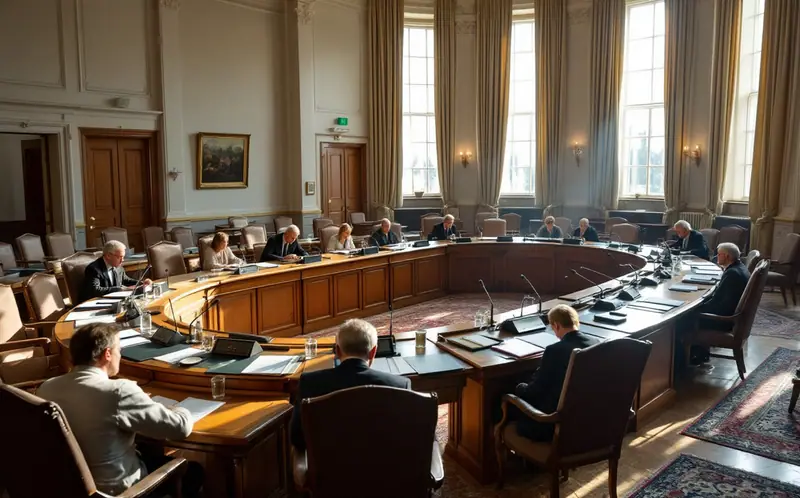
How the joint commission of the Lithuanian Seimas and the World Lithuanian Community is formed, what it discusses and what happens to its resolutions.
Most countries with a large emigrant population have some office that deals with people abroad: a ministry department, an advisory council, a special envoy. Lithuania has those too, but it also has something less common. Inside its parliament, the Seimas, sits a commission in which members of parliament and representatives of Lithuanians abroad meet as equals around the same table. Its full name is the Commission of the Seimas of the Republic of Lithuania and the World Lithuanian Community, shortened in Lithuanian to the LRS ir PLB komisija. This page explains what it is, how it works and what it talks about.
What it is
The commission is a permanent commission of the Seimas. Like other Seimas commissions, it is formed anew for each parliamentary term, which in Lithuania lasts four years, and it works under regulations approved by the Seimas.
What makes it unusual is its membership. Half of its members are members of the Seimas, chosen from the parliamentary groups. The other half are representatives of the World Lithuanian Community, the federation of Lithuanian communities in other countries, put forward by that organisation and usually coming from several different national communities. Each side has ten members, and each member has a named substitute. The commission has two co-chairs: one a member of the Seimas, the other a representative of Lithuanians abroad.
Where it came from
The idea first came up in 1993, soon after independence, among Lithuanian Americans and Canadians who wanted a regular channel to the new parliament. It took about two years of talks with the parties then in the Seimas to set up a commission of the Seimas and the Lithuanian communities of the United States and Canada. The organisers were keen that cooperation with the diaspora should not be seen as taking sides in domestic politics, and the commission has kept members from across the parliamentary groups ever since.
As Lithuanian communities in Europe, South America, Australia and the former Soviet republics became more active, the arrangement widened. In 2007 the Seimas approved new regulations, and the body took its present form as a commission of the Seimas and the whole World Lithuanian Community.
What it is for
The regulations give the commission a broad purpose: to encourage cooperation between Lithuanians living in Lithuania and those living abroad, to promote mutual help and support, to exchange scientific, cultural and other information, and to make proposals to the Seimas and other state institutions.
In practice, its sessions return to a handful of themes.
| Theme | Typical questions |
|---|---|
| Education abroad | Support for weekend and Saturday schools, teachers and textbooks; Lithuanian studies at foreign universities; recognition of diaspora schooling |
| Citizenship | Dual citizenship, restoration of citizenship, how the Migration Department handles applications from descendants |
| Emigration and return | Why people leave, what help returning families need, schooling for returning children |
| Culture and heritage | Lithuanian heritage abroad, archives and libraries of the emigration, song festivals and sports games |
| Civic participation | Voting from abroad and how citizens abroad are represented |
Citizenship has been on the agenda in almost every term. The constitutional limit on dual citizenship, the 2010 Law on Citizenship and the amendments that followed were all discussed with the diaspora side of the commission, which has consistently pressed for wider rules. The background is set out on the page about Lithuanian citizenship and the dual citizenship question.
How a session works
The commission meets in sessions of several days, usually in the Seimas buildings in Vilnius. Representatives from abroad travel in for them. A typical session includes:
- Reports from ministries and agencies on questions raised earlier, for example on funding for Lithuanian schools abroad or on citizenship cases.
- Presentations by the diaspora members on the situation in their countries.
- Discussion in working groups on particular themes.
- Adoption of a resolution that sets out the commission's conclusions and proposals.
Ministers, officials and representatives of other bodies are often invited, so a session is also a chance for diaspora members to put questions to the people who make decisions.
What happens to its recommendations
The commission does not pass laws. Its resolutions are recommendations addressed to the Seimas, the government, ministries and other institutions. Their weight comes from the fact that they are adopted inside parliament, by members of parliament together with diaspora representatives, and that the institutions concerned are asked to respond. A common pattern is that a proposal appears in a resolution, an official reports back on it at a later session, and the issue stays on the agenda until it is settled one way or another.
Whether a recommendation leads anywhere depends on follow-up, both by the institutions it is addressed to and by the commission itself, which can return to the same point session after session.
Common questions
Is it the same as the World Lithuanian Community?
No. The World Lithuanian Community is a voluntary organisation of Lithuanians abroad with its own Seimas, board and constitution. The commission is a body of the Lithuanian parliament in which that organisation's representatives take half the seats.
Do the diaspora members vote in the Seimas?
No. They take part fully in the commission's own work and vote on its resolutions, but they are not members of parliament and have no vote in the Seimas itself.
Does it deal with individual cases?
Generally not. It looks at rules and policies. A person with a problem over a passport or a citizenship application should go to the embassy or the Migration Department, although a pattern of similar cases can become a subject for the commission.
How to follow its work
- The Seimas website publishes the commission's composition, session agendas and resolutions under its list of commissions, at lrs.lt.
- National Lithuanian communities usually report on sessions in their newsletters and at annual meetings.
- If you want to raise a question, the practical route is through the national community of your own country, whose board can pass it to the diaspora members of the commission.
More about how Lithuanians abroad organise is collected in the community circle.

Agne Corrigan
Agne grew up in Klaipeda and has lived in Manchester for fifteen years, where she helps out at a weekend school and with community events. She writes about community life, travel and raising children between two cultures.