Kitchen drains before Kūčios: a practical plan
A calm December routine for the kitchen sink and drains, so twelve Kūčios dishes and a house full of family do not end with a blocked pipe.
Every December our kitchen sink does more work in three days than it does in the rest of the month. Twelve dishes for Kūčios, the Christmas Eve supper, means beet water, poppy seeds, mushroom soaking liquid, herring brine and a mountain of potato peel, all heading for one drain while the children practise their carols at the table behind me.
Say your family lives in Aurora, Colorado, and your parents are flying in for the holidays. The worst moment for a slow sink is the afternoon of the 24th. Local pages for Aurora drain cleaning usually cover the kind of kitchen and bathroom blockages that build up over a year, and it helps to know what to look for before the cooking starts. This article walks through the weeks before the supper: what to check, what to keep out of the pipes, who does which job, and what to write down for next year.
What the Kūčios kitchen asks of the plumbing
The supper itself is meatless, but it is not light on the drains. There is oil from frying the fish, starch from boiled potatoes, the grey water left after soaking dried mushrooms, poppy seed that gets everywhere, cranberry kisielius that sets as it cools, and the cloudy water from rinsing herring. Each of these is harmless on its own. Together, over two or three days of cooking, they find every narrow place in an old pipe.
Then there are the people. A house that normally holds four suddenly holds nine, with showers running one after another in the morning and the dishwasher going twice a night. In Lithuanian we would say the sink užsikimšo, it has got blocked, and in my experience it always happens with a full house watching.
My children have learned the word kriauklė (sink) mostly because I say it in a worried voice every December. It is a good word to teach: short, practical, and it comes with a story.
What to check three or four weeks before
The best time to look at the drains is early December, when the house is still calm and a visit from a professional can be booked without fuss. Colorado winters are cold and dry, and a kitchen that is busy indoors while the yard freezes outside is not the moment to discover a problem. Here is the short checklist we keep on the inside of a cupboard door.
- Run the kitchen sink full and let it drain. Fill the basin, pull the plug and watch. Water that swirls away steadily is fine. Water that sits, gurgles or drains in stops and starts is telling you something.
- Listen to the other drains while it empties. A gurgle in the bathroom basin or the bath when the kitchen sink drains can mean the problem is further along the line, not just under the sink.
- Check the smell. A sour smell from the kitchen drain that comes back after cleaning is often old grease and food sitting in the pipe.
- Look at the shower and the guest bathroom. Hair builds up slowly in a bath that is used every day; a guest basin that is hardly used can dry out and smell. Both will be busy when the family arrives.
- Note anything slow in the basement. If there is a floor drain or a laundry sink downstairs, see whether it holds water after the washing machine empties.
If two or more of these show a problem, especially gurgling across several drains, that is the point to call someone in rather than reaching for another bottle from the hardware shop. A professional can look along the pipe and clear what has built up, and you go into the holiday week without that small knot of worry.
Keeping the cooking out of the pipes
Most of what blocks a kitchen drain at Christmas goes in on the day. A few habits make a real difference, and they are easy to hand out to helpers.
- Fat goes in a jar, not the sink. Keep an old jar by the stove for frying oil and the fat skimmed off anything. Let it cool and set, then put it out with the rubbish.
- Peel onto paper. Potato and beet peel, onion skins and mushroom stems go onto a sheet of newspaper and then into the compost or the bin. My son is in charge of this and takes it very seriously.
- Scrape plates before rinsing. With a dozen dishes there is a lot of leftover on every plate, and much of it is poppy seed or something sticky. A rubber scraper over the bin saves the drain.
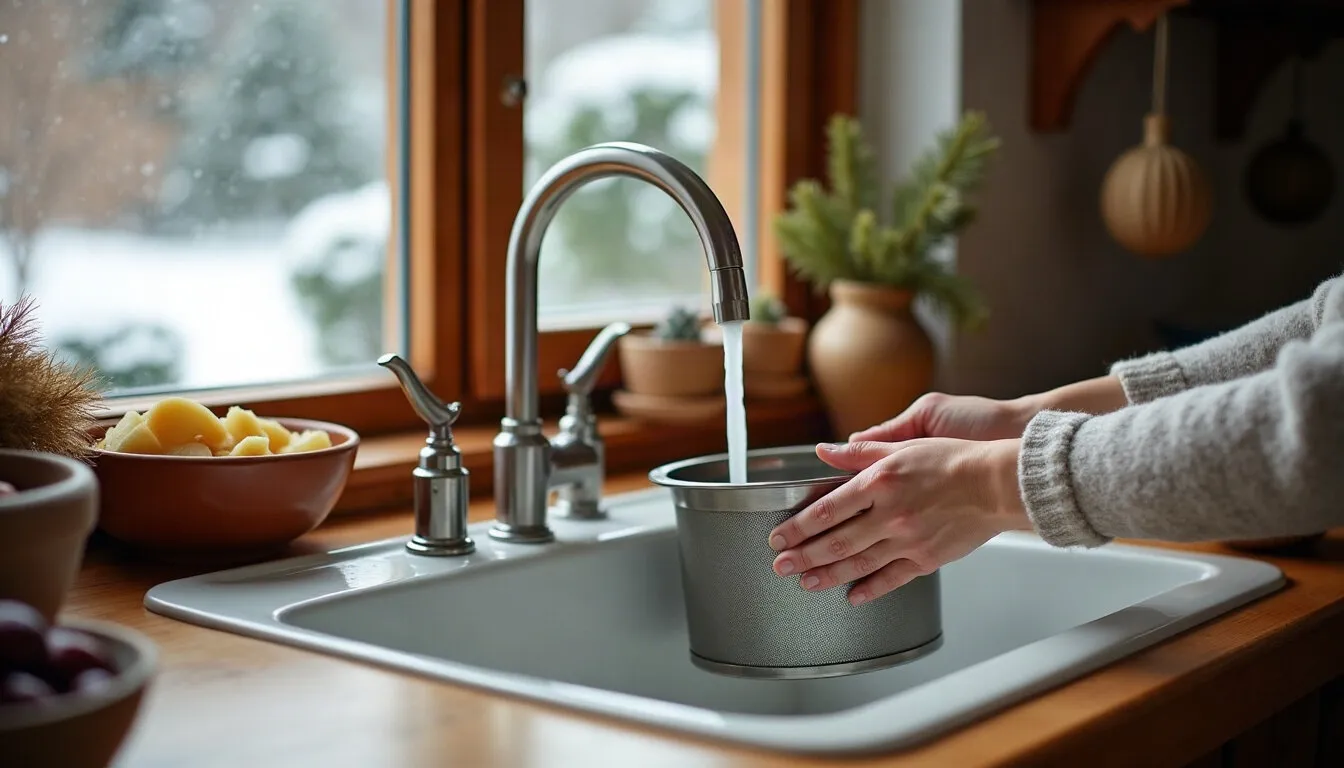
- Use a sink strainer. A simple mesh basket in the plughole catches seeds, rice and small pieces. Empty it often.
- Pour soaking water slowly. Mushroom water and herring brine are thin, but they carry grit and small bits. A sieve over the sink stops most of it.
None of this is complicated, but it only works if everyone in the kitchen knows the rules. I write them on a card and prop it against the window, in both languages, which also happens to be good reading practice for the eight year old.
Two-country note: In many village homes in Lithuania, kitchen scraps traditionally went to the animals or the compost heap, and very little food went down any drain at all. Families abroad often keep the habit of saving peel and leftovers without quite knowing why. It turns out to be one of the kinder things you can do for an old pipe in a city house.
Who does what in the holiday week
A family supper runs on shared work, and the plumbing can be part of the list. In our house the jobs look roughly like this.
| Job | Who usually takes it | When |
|---|---|---|
| Checking the drains and booking a visit if needed | The parent who does the household paperwork | Early December |
| Emptying the sink strainer and the fat jar | Whoever is washing up | Every evening of cooking |
| Peel and scraps to the bin | A child old enough to carry it | During cooking |
| Wiping hair out of the shower trap | The last person to shower each morning | Every day while guests stay |
The table is not a rule, only a way to make sure nobody assumes someone else did it. When grandparents stay, I also show them which tap is which and where the strainer lives, because a kind guest who offers to wash up will otherwise pour everything straight down the sink.
If a drain does block during the visit, resist the urge to try every trick at once. Stop using that sink, keep water out of it, and call for help. A professional will usually want to know what went down the drain and when it started to slow, so tell the children not to be shy about admitting to the cranberry kisielius.
What it costs in effort
The honest answer is: less than you think, if you start early. Checking the drains takes a quiet half hour on a weekend morning. A professional visit, if one is needed, fits easily into the first half of December, long before the shopping and baking take over the calendar.
The effort that really costs something is the emergency kind: a sink full of grey water on the afternoon of the 24th, a dozen people needing plates, the fish half fried. Planning ahead turns that into an ordinary errand, which is the whole point.
Here is the sample week we use before the supper.
A sample week before Kūčios
- Monday: run the sink test and listen to the drains. Book help if anything is slow.
- Tuesday: clean the shower and bath traps; check the guest basin.
- Wednesday: buy a sink strainer if the old one has gone, and find a jar for fat.
- Thursday: make the rule card with the children, in Lithuanian and English.
- Friday: first baking day. Practise the habits on the kūčiukai, the little poppy seed biscuits.
- Weekend: wash and set out the linen tablecloth, count chairs, rest.
The children like this list because it has a job on it for them most days. I like it because it means I am not thinking about pipes while I am trying to remember whether we have enough plates.
For next time
After the holidays, write down what worked: which drain was slow, whether anyone came out, and what you would do earlier. Put that note in the same envelope as next year's shopping list, and the December routine will be ready before you need it.

Ieva Strazdas
Ieva grew up in the Chicago suburbs, spent twelve years of Saturdays at a Lithuanian school and now teaches her own two children the language at the kitchen table. She writes about language, learning and bilingual family life.