The Song Celebration and the diaspora's own festivals
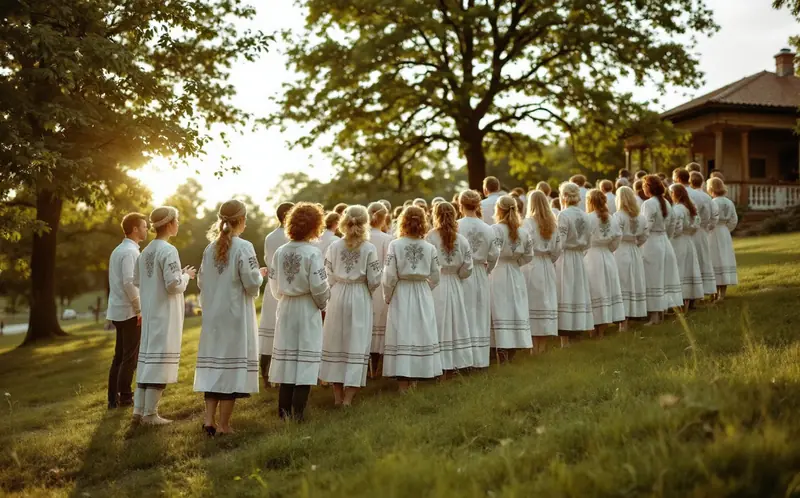
A century of the Lithuanian Song Celebration, its UNESCO listing, the diaspora song and dance festivals, and how choirs abroad prepare and travel to take part.
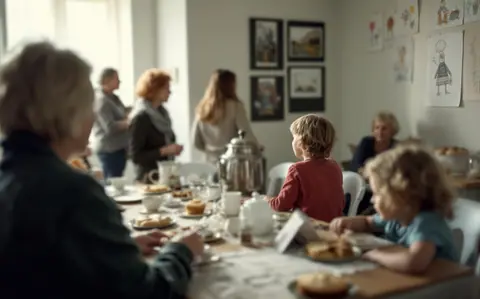
The first time I stood on a Song Day field, I could not hear my own voice. That is the point. When thousands of singers take the same breath and start the same old song, a single alto from Melbourne becomes one small part of a sound that rolls across a park and back. People who have never sung in a choir tend to understand the Lithuanian Song Celebration, Dainų šventė, only after they have stood inside it.
This piece is for diaspora families who keep hearing about it from the choir or dance group their children belong to, and for anyone wondering why a community hall in Chicago or Adelaide spends years preparing for a few days in summer.
A short history in order
The Song Celebration is older than most of the institutions around it. Here is the outline.
| Year | What happened |
|---|---|
| 1924 | The first Lithuanian Song Celebration is held in Kaunas, then the temporary capital, in August, with choirs from across the young republic |
| 1928 to 1938 | The celebration is repeated several times, and in 1937 a large folk dance festival is held in Kaunas for the first time |
| 1950 onward | Under Soviet rule the celebrations continue on a regular cycle, with an approved repertoire, but folk songs keep their place on the programme |
| 1990 | The celebration is held a few months after the restoration of independence, during the economic blockade, and many singers from abroad cannot attend |
| 1994 | The event again carries the name World Lithuanian Song Celebration, and diaspora choirs take part in larger numbers |
| 2003 and 2008 | UNESCO recognises the Baltic song and dance celebrations |
| 2024 | The centenary celebration is held in Kaunas and Vilnius |
The Soviet decades deserve a word. The festivals were state events, with songs that praised the system alongside the folk songs. Singers still remember how much it meant to sing the old Lithuanian songs together in public in those years. Song gatherings later became part of the wider movement that preceded independence across the three Baltic countries, which is why many people call that period the Singing Revolution.
What happens at a Song Celebration
A modern celebration runs for about a week and has several large parts. The names vary a little from edition to edition, but most include:
- Folklore Day, with village-style singing, sutartinės (the old Lithuanian rounds sung in interlocking parts), instrumental groups and the kanklės, the Lithuanian zither.
- Dance Day, held in a stadium, where hundreds of dance groups form patterns on the field that are only fully visible from the stands.
- The Ensembles' Evening, a staged performance by professional and amateur folk ensembles, often outdoors in Vilnius.
- Brass band and folk art events, exhibitions and fairs.
- Song Day, the final concert, with united choirs on the great outdoor stage in Vingis Park in Vilnius.
Song Day is the one most people picture: a stage built like a sloping hillside, choirs grouped by type, a succession of conductors, and an audience that joins in for the songs everyone knows.
The UNESCO recognition
The Baltic song and dance celebrations of Estonia, Latvia and Lithuania were proclaimed a Masterpiece of the Oral and Intangible Heritage of Humanity in 2003. In 2008 they were inscribed on UNESCO's Representative List of the Intangible Cultural Heritage of Humanity, which absorbed the earlier proclamations.
The listing is shared by the three countries. UNESCO's description notes that the large festivals take place every four years in Lithuania and every five years in Estonia and Latvia, that up to 40,000 singers and dancers take part, and that most of them belong to amateur choirs and dance groups that rehearse all year in local cultural centres. You can read the full entry on the UNESCO intangible heritage site.
What the listing protects is less the event itself than the whole chain behind it: local choirs, village dance groups, teachers, conductors, the habit of rehearsing every week in a school hall. That chain reaches far beyond Lithuania.
The centenary in 2024
The centenary celebration ran from 29 June to 6 July 2024 under the title "Kad giria žaliuotų", roughly "May the forest grow green". The Seimas had declared 2024 the year of the Song Celebration. The opening was held in the Song Valley in Kaunas, the city of the first celebration a hundred years earlier, and the week ended with Song Day in Vingis Park in Vilnius.
The organisers counted participants in the tens of thousands, and the city of Vilnius reported that more than 2,000 Lithuanians from abroad were expected, from around 21 countries. Choirs and dance groups came from the United States, Canada, Argentina, Poland and many European countries. A fair on Vilnius Town Hall Square on 30 June was given over to Lithuanian communities abroad and their projects.
For many diaspora singers, the centenary was the reason to finally go. Ensembles that had not travelled for years rebuilt their numbers and booked flights a long time ahead.
The diaspora's own festivals
Emigrants after the Second World War brought the tradition with them, and because they could not take part in Lithuania for decades, they built their own.
North America
The first Lithuanian Song Festival in North America was held in Chicago in 1956, modelled on the interwar festivals in Kaunas. It was followed in 1957 by the first Lithuanian Folk Dance Festival, also in Chicago, held on 30 June at the International Amphitheatre with dancers from across the United States and Canada.
Both became regular events, held in different cities in turn. The folk dance festival has been held roughly every four years. The fifteenth took place in Baltimore in 2016, and the sixteenth, postponed from 2021, was held in Philadelphia from 1 to 3 July 2022, with about 2,000 dancers. Song festivals have been less frequent in recent decades. After a gap of about ten years since the previous one in Chicago, the eleventh North American Lithuanian Song Festival was held in Cleveland, Ohio, from 27 to 29 June 2025, with around 1,500 singers.
Australia
Lithuanian Days in Australia, Australijos lietuvių dienos, have been held since 1960. They take place every two years over the Christmas and New Year holidays, rotating mainly between Adelaide, Melbourne and Sydney, and they combine a song festival, a folk dance festival, sport, exhibitions and meetings. Adelaide hosted the 2024 edition. In a country where the Lithuanian community is small and widely spread, Lithuanian Days are often the only time choirs from different cities sing together.
Elsewhere
Smaller song and dance gatherings are organised by Lithuanian communities in Europe and South America, sometimes as part of a national community's annual meeting or a regional festival. They are less regular, and the best way to hear about them is through the local Lithuanian school or community.
How a choir or dance group abroad prepares
Taking part in a celebration in Lithuania is a long project, and groups that have done it describe much the same sequence.
- Watch for the repertoire. The organisers publish the programme and scores well ahead of the event. Each choir type and dance group category learns a set list, and every group performing in the united concerts must know it the same way.
- Learn it properly. Abroad that usually means extra rehearsals, sometimes with a conductor or choreographer who has worked with groups in Lithuania. Diaspora singers often need help with pronunciation, and dancers with the exact figures, because thousands of others will be doing the same steps.
- Pass the review. Groups are assessed before they are accepted to perform, because the united concerts only work if everyone sings or dances the programme the same way. How groups abroad are assessed has varied from one celebration to the next, so ask the organisers early how it will work.
- Sort out costumes. Folk costume is expected, and it often follows a particular region. A full set takes time to sew or buy, and many groups lend costumes from one generation of dancers to the next.
- Plan the travel. Flights, accommodation for a whole group, rehearsal days in Lithuania before the performances, insurance, and a plan for children and teenagers who travel with the group. Many choirs start fundraising two or three years ahead with concerts, dinners and fairs.
- Rehearse together on site. The united rehearsals in Lithuania are long and often hot. Water, hats and patience matter as much as the music.
For parents
If your child dances in a diaspora group that plans to travel, ask early about the rehearsal schedule, the costume, the cost and who will supervise minors. Dance groups are often the main reason teenagers keep speaking Lithuanian with their friends, and a trip like this tends to stay with them. It also connects with the rest of the year's traditions; the songs they learn are often the same ones that come out at Kūčios and the winter holidays.
If you simply want to watch
You do not need to sing to go. Tickets for the main concerts in Lithuania go on sale months ahead, and some events, such as parades and fairs, are free and in the open air. Book accommodation in Vilnius early for the final days, because the city fills up. Bring a rain jacket as well as sun cream, and expect to stand for a long time.
The diaspora festivals are the easier start. They are smaller, closer to home, and usually linked to a weekend of concerts, dinners and dances where newcomers are welcome. If your local Lithuanian school or parish has a choir, ask when they next plan to take part; more on how those groups work is in our community circle.

Egle Matulis
Egle lives in Melbourne, sings in a folk ensemble and cooks for more Christmas Eve tables than she can count. She writes about traditions, food, song and craft.