What a new kitchen floor looks like in a family between two countries
Choosing and living with a new kitchen floor in a busy two-language home, from homework chairs and snow boots to the Christmas Eve cooking day.
Our kitchen floor knows more Lithuanian than most of our neighbours. It has heard every conjugation drill, every dictation and every argument about whether ačiū needs the line over its last letter, because the kitchen table is where Saturday school homework happens. It has also taken a decade of chair legs, wet boots and dropped spoons, and by last winter it was showing all of them.
Say your family lives in Denver, where winters bring snow and grit through the door and the air stays dry indoors. We found that planning lvp flooring installation in Denver was easier once we knew how the room is really used, hour by hour. This article covers what a busy two-language kitchen asks of a floor, what to think about before choosing, how to live through the work with children, and what to keep for next time.
What a homework kitchen asks of a floor
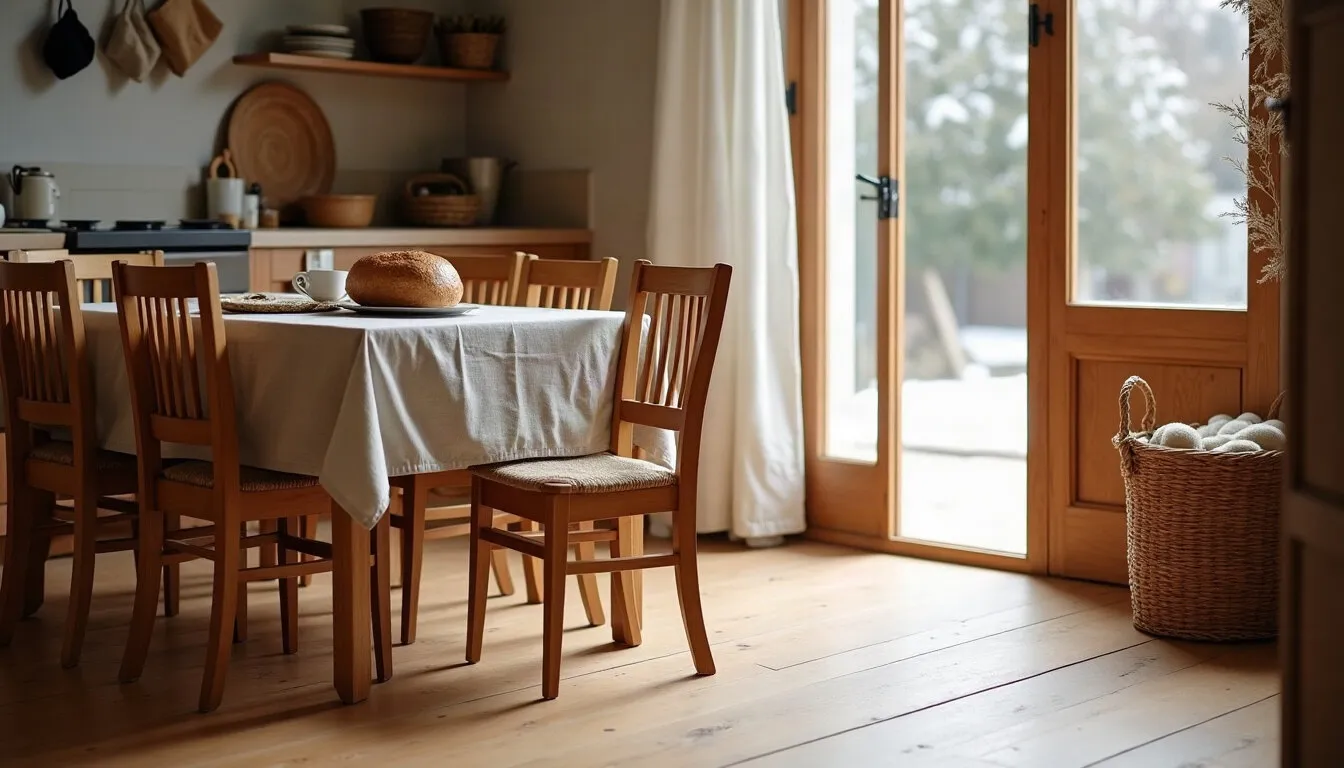
Most flooring advice imagines a kitchen as a place where someone cooks. Ours is also a classroom, a cloakroom and, in December, a production line for twelve Christmas Eve dishes. The floor under the table takes the most punishment: four chairs pushed back and pulled in a dozen times a day, a child who swings her legs while spelling, and a younger one who prefers to do his reading lying on the floor with his chin in his hands.
Then there is the doorway. In a Denver winter, snow melts off boots onto the first few feet of floor, and the fine grit that comes in with it acts like sandpaper. By spring our old floor had a dull grey path from the back door to the sink.
And there is the cooking. Kūčios, the Christmas Eve supper, means hours of boiling, frying and draining, with pots of beet water and poppy seed milk moving across the room. Easter means eggs dyed in onion skins on the counter. Spills are not a risk in our kitchen, they are a schedule.
So when we started thinking about a new floor, our wish list was simple: something that handles water and grit, does not mind chairs, feels warm enough for bare feet and small bodies on the floor, and can be cleaned with a mop in a few minutes on a Saturday morning.
Questions to settle before you choose
Luxury vinyl plank is the option many families ask about for a room like this, mainly because it copes well with spills and daily wear and comes in looks that resemble wood or stone. Whether it suits your house is a conversation for an installer who has seen the room, but it helped us to arrive with our own answers ready. This is the short checklist I wrote on the back of a dictation sheet:
- Which rooms? Just the kitchen, or the kitchen, hall and the downstairs bathroom too? A continuous floor looks calmer and avoids awkward thresholds where chairs and suitcases catch.
- What is underneath? The installer will check the existing floor and subfloor. An uneven base shows through a new floor, so ask what preparation the room needs.
- How will we live during the work? Where will meals happen, and where will homework go?
- What about the edges? Skirting boards, the gap under the dishwasher, the step down to the back door. Ask how each one will be finished.
- How do we clean it? Ask what cleaning methods and products suit the floor you choose, and write the answer down.
- What colour shows dirt the least? In a house with children and snow boots, a mid-tone with a little texture forgives far more than a very dark or very pale floor.
A good flooring company will walk the room with you, measure, look at the base, and tell you plainly what the job involves. Ask them to explain anything you do not follow. If you are bringing samples home, put them by the back door and under the homework table for a few days and see how they look in morning and evening light.
Shoes off, slippers on
Two-country note: In most Lithuanian homes, shoes come off at the door and guests are handed a pair of šlepetės, house slippers, from a basket in the hall. My grandmother kept a row of them in every size and was faintly offended if anyone refused. It is one habit worth bringing to a house abroad: a floor lasts longer, and a kitchen floor in particular stays cleaner, when the street stays at the door.
We put a basket of slippers by the back door when the new floor went in, and a proper mat outside and inside. The children were told it was a Lithuanian custom, which is true, and also that it saves me mopping, which is truer. Visitors from the Saturday school car pool now kick off their boots without being asked.
Felt pads went on every chair leg the same week. A small thing, but chairs dragged across any floor will leave marks eventually, and ours move more than most.
Living through the installation with children
The installation itself was less disruptive than I feared, but only because we planned the week around it. Here is roughly how it went in our house.
- The weekend before: we emptied the kitchen of everything that could be lifted. The children packed the homework drawer into a box labelled in their own spelling. The table and chairs went to the dining room, which became kitchen, classroom and canteen at once.
- Installation days: we followed the installer's guidance on when we could walk on the floor and when furniture could go back. The children ate breakfast on a picnic blanket in the living room and declared it the best week of the year.
- The first evening back: chairs returned with their new felt pads, the slipper basket went by the door, and homework resumed at the table with an unusual amount of care for the floor.
As for effort, the biggest jobs were ours, not the installer's: clearing the room, finding somewhere to cook simple meals, and keeping two children from testing the new floor with their socks before we were told it was ready. I will not guess at costs. Ask for a written estimate that lists the preparation, the material and the finishing, and compare it with what you expected before you agree.
A practical tip from our week: decide in advance where the fridge and the dishwasher go while the floor is being laid, and who will be home to let the crew in. In a family where both parents work and one child has a Saturday school play rehearsal, this needed a short meeting of its own.
Keeping the floor, and the routine, going
A new floor changes habits for about a month, and then the old habits come back unless you build them in. We tied the floor to the Saturday routine. After the morning lesson at the table, the children wipe the table, sweep under it and put the chairs back, while I run a damp mop over the doorway. It takes ten minutes. The younger one counts the chairs in Lithuanian as he lines them up: viena, dvi, trys, keturios. The feminine forms are a small lesson of their own.
Before the big holidays we do a little more. Before Kūčios, we put a washable runner in front of the stove for the day of cooking, keep a towel by the sink for drips, and lay an old linen cloth under the table where the children help with the dough. After the supper, everything goes into the wash and the floor gets a proper clean.
None of this is complicated. The point is that the kitchen is the busiest room in a bilingual house, and the floor is the part of it nobody thinks about until it starts to look tired.
For next time
Keep the name of the floor you chose, the cleaning advice and the installer's details in the same folder as the appliance manuals. Note which chairs need new felt pads each autumn, and refill the slipper basket before the first snow. If the hallway or the bathroom are next on the list, write down what worked in the kitchen while you still remember it.

Ieva Strazdas
Ieva grew up in the Chicago suburbs, spent twelve years of Saturdays at a Lithuanian school and now teaches her own two children the language at the kitchen table. She writes about language, learning and bilingual family life.