Retiling the bathroom before a long family visit: a practical plan
Retiling a small bathroom before a parent's long winter stay: what to decide first, who does what, and how to keep handmade tiles looking good afterwards.
My mother rang from Kaunas in early autumn: she had booked six weeks with us in Dublin over the winter. My first thought was the spare room. My second was the small bathroom beside it, with two cracked wall tiles left by the previous owners.
Retiling a bathroom before a long visit is a job with a fixed deadline and a lot of small decisions, and it goes better done in the right order. The finish we kept returning to was the glazed, slightly uneven zellige mosaic style, which suited a small room with poor light. This is the sequence I would follow again: what the visit asks of the room, what to decide first, who does what, and what to keep afterwards.
What a long stay asks of a small bathroom
A guest who stays for a weekend forgives a lot. A parent who stays for six weeks uses the room every morning and every evening, and notices everything. The bathroom stops being a spare and becomes a second main bathroom, with towels drying, a shower running twice a day and the window kept shut because December in Dublin is damp and grey.
So the first question is not the colour of the tiles. It is what the room has to survive. In our case that meant three things:
- Steam and splashes around the shower and the basin, every day, for weeks.
- Easy cleaning, because nobody wants to scrub grout lines while a guest is in the house.
- Good light, since the window is small and the winter mornings are dark.
Writing these down before visiting any showroom saved us from falling for a tile that looked lovely on a display board and would have been wrong for the room. It also gave us something to say when relatives on video calls offered opinions, which they did, at length.
Deciding on the tile before anyone books a tradesperson
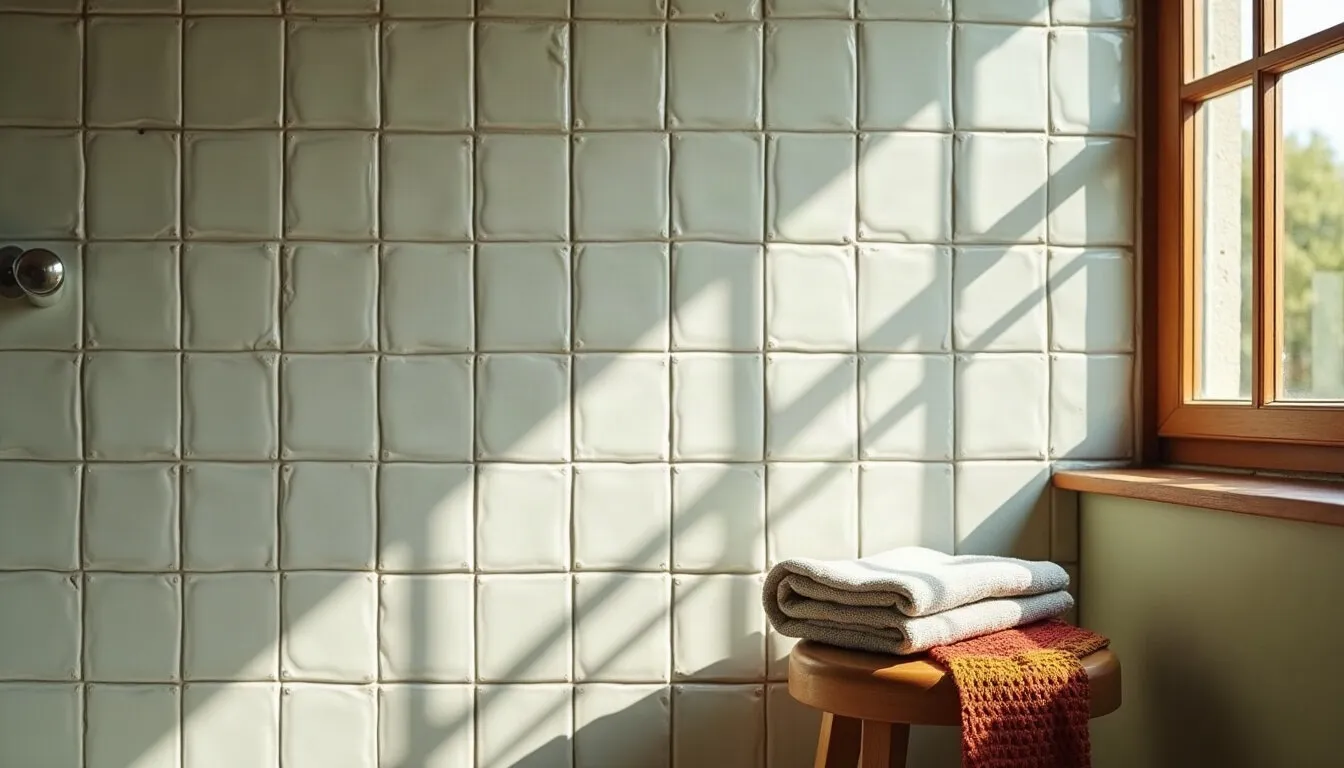
Zellige is the traditional handmade tile of Morocco: shaped from clay, glazed and fired, so each piece varies a little in colour, thickness and surface. Laid on a wall, that variation catches light in a way flat factory tiles do not. That was the appeal for a dim bathroom. It also means the finished wall looks irregular on purpose, and anyone who expects a perfectly even grid should know this before committing.
Mosaic formats break the surface into smaller pieces, which suits curved or awkward walls and small rooms. Larger zellige squares or the long rectangular bejmat shape give a calmer look with fewer joints. White, cream and pale green reflect what little daylight there is; deep blue or black makes a small room feel enclosed but can work on one feature wall.
Here is the order we followed, and I would not change it:
- Measure the walls you actually want to tile. Not the whole room, just the shower area, the splashback behind the basin and any half-height wall. Write the measurements on paper and take photographs.
- Order samples and look at them in the room. Prop them against the wall in the morning and again in the evening under the electric light. Handmade tiles shift colour more than you expect.
- Choose the grout colour with the samples in hand. A pale grout with white tile reads as one surface; a darker grout makes every joint visible. With irregular tiles, the joints are part of the look.
- Ask the tiler before you order the full quantity. A good tiler will tell you how much extra to allow for cuts and breakages, which matters more with handmade pieces than with standard ones.
- Only then place the order, and ask when it will arrive. A tile that lands after the tiler's free week is a tile that waits until spring.
Two-country note: Many families in Lithuania live in flats in older apartment blocks, where the bathroom is small, fully tiled and has often been redone more than once over the decades. In my experience the conversation in Kaunas is about how long the tiles will last; in Dublin it is more often about how they look. A visiting parent will usually bring the first question with them.
Who does what
This is where a renovation abroad differs from one at home in Kaunas, where there was always a cousin who knew a man. In Dublin we knew nobody, so we split the work clearly and kept it written down.
What we did ourselves:
- Cleared the room, took down the mirror and the shelves, and stored everything in boxes in the hall.
- Chose the tiles, the grout colour and the layout, with photographs of each wall marked up in pencil.
- Checked the delivery when it arrived, opened every box and set aside any broken pieces to show the supplier.
What we left to professionals:
- Anything behind the tiles in the shower. The waterproofing of a shower area is the part of the job you never see and the part that matters most. A good tiler or bathroom fitter will explain how they prepare the wall and what they use. This is not a weekend job for an amateur, and a leak behind new tiles is a far bigger problem than two cracked ones.
- Any plumbing changes. If the basin or the shower valve moves even slightly, that is work for a plumber, booked before the tiler.
- Any electrical work. Lights, extractor fans and shaver sockets in a bathroom are for a qualified electrician, and your local building or electrical rules will set out what is allowed where.
When you speak to a tiler, the useful questions are simple: have they worked with handmade tile before, how do they handle the variation in thickness, do they seal the tiles and the grout, and how long should the room stay unused afterwards. The answers tell you more than a quote does.
What it costs in time and patience
I will not give prices, because they vary with the room, the tile and the city, and anything I wrote would be out of date by spring. The real costs worth planning for are time and disruption.
| Retile before the visit | Wait until after the visit | |
|---|---|---|
| Disruption | Bathroom out of use for a stretch of days, dust in the hall | None during the stay |
| Risk | Delays push the work into the arrival week | Guest uses a room with cracked tiles and old grout |
| Who it suits | Households with a firm date for the tiler and the tiles already delivered | Households still deciding, or with an uncertain delivery date |
We chose to do it before, but only because the tiles had arrived and the tiler had confirmed a week in November. If either of those had slipped, I would have patched the cracked tiles, cleaned the grout and booked the full job for the spring. A rushed renovation finished the night before a guest arrives is worse than an honest old bathroom.
Whichever you choose, put the plumber before the tiler and leave a week of ordinary use before the guest arrives. That week is when you find the shelf that blocks the window or the towel rail that drips onto the new floor.
Living with handmade tiles afterwards
Glazed handmade tile is not delicate, but it does ask for some care. Ask the tiler or the supplier how the tiles and grout were sealed and how often that needs redoing. Clean with mild products and a soft cloth rather than anything harsh or abrasive, which can dull the glaze and wear the grout. Wipe the shower walls down after use if you can; in a damp climate with a small window, that habit does more than any cleaning product.
When my mother arrived she inspected the room the way she inspects everything, ran her hand along the wall and said the tiles looked as if someone had made them by hand. I told her that was rather the point. By the second week she had stopped commenting on the uneven surface and started commenting on how bright the room was in the mornings, which from her is high praise.
For next time
Keep the leftover tiles in a labelled box in a dry place, along with a note of the grout colour, the sealant the tiler used and the date of the work; a single cracked tile years from now is then a small repair, not a hunt for a match. If another long visit is coming, book the tradespeople before the flights, not after.

Mantas Kelmelis
Mantas moved from Kaunas to Dublin in his twenties and has since helped friends and relatives through more passport, birth record and residence paperwork than he would like. He writes about citizenship, documents and moving between countries.