How Lithuanian Saturday schools work abroad, and how to choose one
Who runs Lithuanian weekend schools abroad, what a Saturday there looks like, what they cost and how to get a child through the first term without tears.
For twelve years my Saturdays started the same way: a thermos of tea in the car, a pencil case that never had a sharpener in it, and a drive to a parish hall where about a hundred children were about to spend the morning in Lithuanian. I did not always want to go. Now I drive my own two children to a school very much like it, and I understand what my parents were paying for.
If you are new to the idea, this is how Lithuanian weekend schools abroad usually work: who runs them, what happens in a day, what the levels mean, what they tend to cost and how to get through a first term.
What a Saturday school is
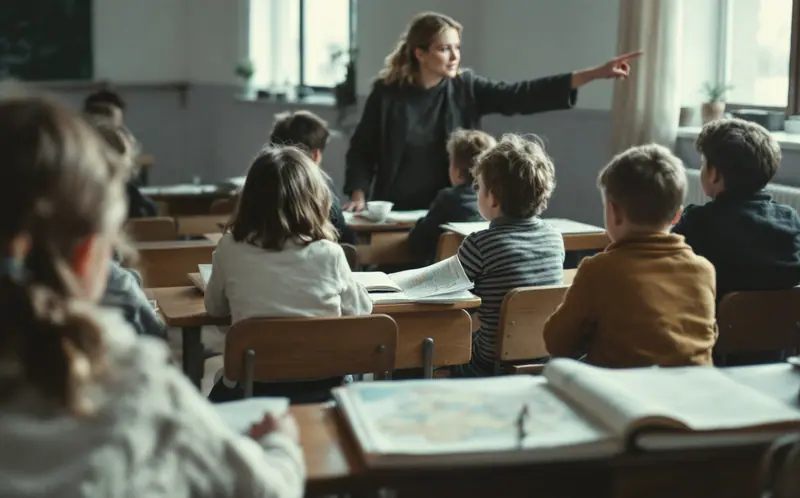
In Lithuanian the usual name is lituanistinė mokykla, a school of Lithuanian studies. Many people simply say šeštadieninė mokykla, Saturday school, even when the school meets on a Sunday afternoon or a weekday evening. The idea is the same everywhere: children who go to an ordinary school during the week spend a few extra hours learning the Lithuanian language, and usually some history, geography, song and dance as well.
They are not small. Lithuanian government documents from 2023 counted more than 230 of these informal schools outside Lithuania, attended by roughly 9,500 children. Some have three pupils around a kitchen table in a small town. Others, in places with long-settled communities such as Chicago, Toronto or London, fill a whole building and run classes from preschool to the end of secondary school.
A handful of schools abroad are full-time day schools that teach the Lithuanian curriculum all week. This piece is about the far more common weekend kind.
Who runs them
Almost all weekend schools are run by volunteers. The usual set-up is a parents' committee or a board elected by families, often working under a local Lithuanian community organisation or a parish. The school is normally a registered non-profit or part of one, which lets it rent rooms, take fees and hold insurance.
The headteacher is often a paid or part-paid post. Teachers may be paid a modest sum per Saturday, or they may be volunteers. Rooms are borrowed or rented: parish halls, Lithuanian community centres, the classrooms of a local school on its day off.
Support also comes from Lithuania. The Ministry of Education there has for many years backed schools abroad with textbooks, summer training courses for teachers, and small grants that schools apply for. The amount and the rules vary from year to year, so a school's committee is the place to ask what it currently receives. None of this makes the school an arm of the Lithuanian state. Day to day, the families decide.
What a Saturday looks like
Timetables differ, but a typical morning at a mid-sized school looks something like this:
| Time | What happens |
|---|---|
| 9:00 | Arrival, coats off, younger children taken to their rooms by parents |
| 9:15 to 10:45 | Lithuanian language lesson: reading, writing, grammar, spoken work |
| 10:45 to 11:15 | Break, snack, the corridor at its loudest |
| 11:15 to 12:00 | History, geography or "Lithuanian studies", depending on the year |
| 12:00 to 12:45 | Song, folk dance, choir or a craft session |
| 12:45 to 13:00 | Pick-up, notices, homework handed out |
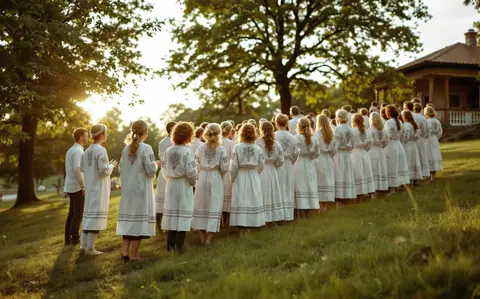
Smaller schools compress this into two hours: one block of language and one of song, stories or games. Some add a short assembly at the start, and many mark national days with a programme the children prepare: 16 February (the 1918 Act of Independence), 11 March (the restoration of independence in 1990), Mother's Day in May and a Christmas show in December.
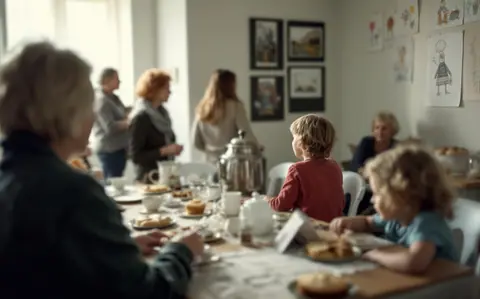
Parents often stay for the morning, either drinking coffee in a side room or helping in the kitchen. That coffee room is half the point. It is where families swap children's books, plan birthday parties and find out who has a spare folk costume in age eight.
The levels and what they mean
Schools usually sort children by age and by how much Lithuanian they already have.
Preschool groups
The darželis (kindergarten) group takes children from about three to six. The work is songs, rhymes, colours, counting, animals and simple instructions. The aim is for children to hear and enjoy the language, not to read it.
Primary classes
From about six or seven, children move into numbered classes. The first years cover reading and writing, the letters English does not have (ą, č, ę, ė, į, š, ų, ū, ž), and a growing vocabulary. Grammar arrives gently: noun endings, verb forms in the present and past.
Upper classes
Older pupils read short literature, write compositions, study Lithuanian history in more depth and learn the grammar properly, including the case system. Some larger schools run classes up to the age of seventeen or eighteen and hold a small graduation. In some places older pupils can sit a language exam that their regular school or a local authority recognises; whether that exists where you live is a question for the school.
Two tracks
The biggest practical difference is between children who hear Lithuanian at home every day and children who do not. A child with two Lithuanian-speaking parents may arrive at six speaking fluently but unable to read. A child with one Lithuanian grandparent may arrive knowing ten words. Good schools keep these groups apart where they can, often with a separate class for learners, sometimes taught partly in English. If a school puts every seven-year-old in one room regardless, ask how the teacher handles the spread.
Who the teachers are
Teachers at weekend schools tend to fall into three groups. Some trained and worked as teachers in Lithuania before emigrating. Some are parents with a good command of the language who learned to teach on the job. Some are older pupils or young adults who grew up in the school and now help with the little ones. Training is offered through summer courses, online seminars and teaching materials prepared in Lithuania, and many schools pair new teachers with experienced ones.
What matters to a parent is less the teacher's paperwork than two simple things: does the class run in Lithuanian for most of the time, and does the teacher know what each child can actually do. A short chat at pick-up in the first month will tell you both.
What it costs, in general terms
Fees vary widely, and I would not trust any single figure. In general you can expect:
- A term or year fee per child, often with a reduced rate for a second or third child.
- A materials charge for workbooks and readers, sometimes included in the fee.
- Small extra costs through the year: a costume for the dance group, a ticket for the Christmas show, a contribution to a trip.
- A volunteering duty for parents. Many schools ask each family to do a number of kitchen shifts, cleaning rotas or event jobs, and some charge a little more if you cannot.
Weekend schools almost never make money. Fees cover rent, teachers' payments and insurance. If cost is a worry, say so to the committee quietly. Most schools would rather keep a child than lose one over a fee, and many have arrangements nobody advertises.
How to choose a school
In many places there is only one option within reach, and the choice is really whether to go. Where there are two, or where an online class is the alternative, these questions help:
- How long is the drive, really, at 8:30 on a dark February Saturday? Distance decides more drop-outs than anything else.
- How are children grouped? Ask what happens to a child who speaks well but cannot read, and to one who barely speaks.
- How much of the morning is in Lithuanian? Some English for learners is normal; mostly English for everyone is a warning sign.
- What does the school expect from parents, in hours and in money?
- What happens outside the classroom: choir, dance, a summer camp link, holiday shows? Children stay for friends far longer than for grammar.
- Can you sit in on a morning before signing up? Most schools say yes.
Online classes, which grew a great deal from 2020, suit families who live far from any school or whose children are older and self-motivated. They teach the language well enough. What they cannot give is the coffee room, the dance group and the friend from the next town who also has a grandmother in Šiauliai.
How parents can support it
A Saturday school gives a child two or three hours of Lithuanian a week. That is enough to build reading and writing, and not enough on its own to build speaking. What happens at home during the other six days makes the difference.
- Ask about the lesson in Lithuanian on the drive home, even if the answer comes in English.
- Do the homework at a fixed time, early in the week, rather than on Friday night.
- Read one short Lithuanian book together each week. A shelf of picture books goes further than one expensive course. Our learning shelf collects some starting points.
- Let the child teach you a song from class. Children love correcting adults.
- Keep in touch with one other family from the school between Saturdays.
Your first-term checklist
- Visit the school once before the term starts and meet the person who will teach your child.
- Fill in the enrolment form honestly about how much Lithuanian your child speaks and reads.
- Buy or borrow the workbook for the class and put the child's name on the cover.
- Pack a snack, a water bottle, two pencils, an eraser and a sharpener (my mother never managed the sharpener).
- Write the term dates, show dates and your volunteering shifts into the family calendar.
- Agree with your child on one reward for the first month of Saturdays. In our house it was the bakery on the way home.
- Set a short homework slot on Monday or Tuesday evening.
- After four or five weeks, ask the teacher one direct question: is the class right for my child?
- Expect at least one morning of "I don't want to go". Go anyway, and talk about it on the drive home.
Common questions
My child understands Lithuanian but answers in English. Is a Saturday school still worth it?
Yes. This is the most common situation in these schools. Being in a room where everyone speaks Lithuanian, including other children, is often what gets a child to answer in it.
Neither parent speaks Lithuanian. Will the school accept us?
Most schools will, especially in learner groups, and many have children whose Lithuanian grandparent is the only link. Ask how homework support works when parents cannot help with the language.
How long do children usually stay?
It varies. Many leave around the start of secondary school, when weekend sport and exams compete for the time. Children who are in a dance group, choir or camp tend to stay longer, because by then the school is where their friends are.
Is it too late to start at ten or eleven?
No. Older beginners learn to read quickly because they already read in English. They may need a learners' class at first, and they often catch up faster than parents expect.
If you are still deciding, the language circle gathers our pieces on Lithuanian at home and in class, and the community circle covers the wider life around the schools. The best next step is simpler, though: find the nearest school, ask if you can visit one Saturday, and bring the child.

Ieva Strazdas
Ieva grew up in the Chicago suburbs, spent twelve years of Saturdays at a Lithuanian school and now teaches her own two children the language at the kitchen table. She writes about language, learning and bilingual family life.